Automotive Connectors: Car, Truck, Bus, & Off-Road
Automotive Trends, Challenges and Solutions for Data Connectivity
Item Description:
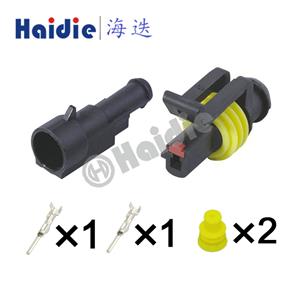
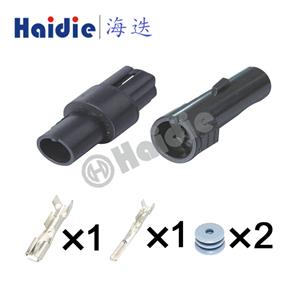
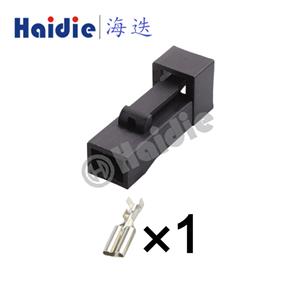
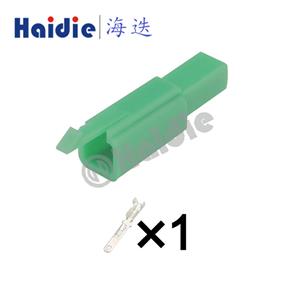
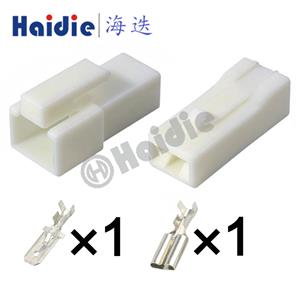
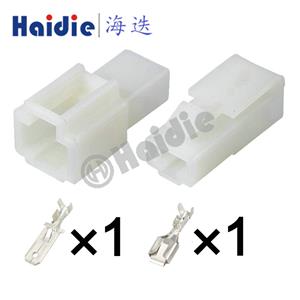
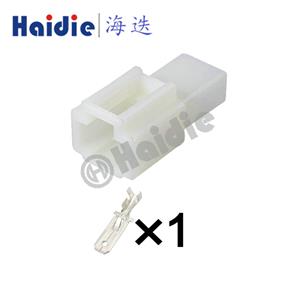
Connector with terminals
COMMON PROBLEM (FAQ)
Q: Can I purchase on line directly? Is the price real?
A: Yes, the price is exactly right. You can purchase on line directly, we would send the goods by the express you choose
Q: What kind of payment do you accept?
A: T/T. PAYPAL or Western Uion
Q: What about your delivery time?
A: We have a lot of products in stock, the delivery time would be within 3 working days. If out of stock, we will check the delivery time for you
Q: How to ship my order? Is it safe?
A: For small package, we will send it by Express, such as DHL, FedEX, UPS, TNT, EMS. That’s Door to Door service.
Q: Do you have a catalogue? Can you send me the catalogue to have a check of all your products?
A: Yes. Please download from our website: https://www.hdconnectorstore.com/UploadFiles/Download/Haidie-connector-catalogue.pdf
Q: I can’t find the product on your catalogue, only have par no. Or picture, will you search for me?
A: Our catalogue shows most of our products, some new connectors, we didn’t update, so please feel free to contact us with the part no. or picture.
Tags: Wire Harness , lampholder
What is wire harness?
A wire harness, also known as a cable harness or wiring assembly, is a series of wires or cables bound together with connectors, terminals, and other components, used to transmit signals or electrical power.
Wire harnesses are typically used in automobiles, industrial equipment, and electronic devices to provide a cost-effective and reliable method for organizing and protecting wires and cables while allowing for easy installation and maintenance.
They can range in complexity from a simple assembly of wires with basic connectors to a complex assembly with multiple branches, connectors, and components.
What are the components of a wire harness?
There are many components of the wiring harness, such as:
1. Conductors: The conductors are the wires that carry electrical current to different components.
2. Connectors: Connectors are the components that join the wires to the different components or to each other. They can be soldered, crimped, or use other methods to make a secure connection.
3. Terminals: Terminals are found at the end of each wire and are used to establish a secure and reliable connection with the corresponding connector.
4. Insulation: Insulation protects the wires from damage and helps to prevent electrical shorts. It can be made of different materials such as PVC, polypropylene, or Teflon.
5. Protective Sleeving: Protective sleeving is used to cover and protect the wires from damage and to provide a clean and organized appearance.
6. Tapes and Ties: Tapes and ties are used to bundle and secure the wires together. They help to keep the wires in place and prevent them from tangling or getting damaged.
7. Grommets: Grommets are rubber or plastic inserts that are used to protect wires as they pass through holes in metal or plastic parts. They help to prevent the wires from chafing and getting damaged.
8. Splices and Taps: Splices and taps are used to join wires together or to tap into an existing wire without cutting it. They provide a secure and reliable connection.
What electrical equipment is wire harness mainly used for?
Wire harnesses are used to connect and transmit electrical signals between various electrical and electronic components in a wide range of applications, including:
1. Automotive industry
2. Aerospace industry
3. Industrial machinery
4. Consumer electronics
5. Medical devices
6. Telecommunication industry
7. Household appliances
8. Lighting industry
What is the function of wire harness?
The function of a wire harness is to provide a secure and organized way to route electrical wires and connectors in a system or device. It keeps wires and connectors in their proper locations and prevents them from becoming tangled or damaged.
A wire harness also protects wires from external elements such as heat, moisture, and abrasion. It also simplifies the process of installing or replacing components by providing a standard connection point for all wires and connectors.
How does it help improve the efficiency of electrical equipment?
Haidie Company’s wiring harness generally has these functions that can improve the efficiency of electrical equipment:
1. By utilizing advanced technologies, modern electrical equipment is designed to consume less energy while still delivering the same level of performance.
2. With modern technologies such as power factor correction, electrical equipment can improve their power factor, leading to better efficiency.
3. With the use of advanced computer simulations and improved materials, electrical equipment can be designed to achieve optimal performance and efficiency.
4. The integration of intelligent control and automation technologies in electrical equipment allows for better monitoring, analysis, and adjustment of their performance.
5. Energy Management Systems: Energy management systems use data and algorithms to optimize the performance of electrical equipment.
How to maintain and upkeep the wire harness?
Regarding maintenance and upkeep, Haidie Electric recommends that you do the following:
1. Regular Inspection
2. Clean and Protect
3. Secure Connections
4. Protect From Heat and Moisture
5. Inspect for Wear and Tear
6. Use Proper Routing
7. Replace Old Harnesses